
A Life Bigger Than My Eating Disorder
For a long time, I did not know who I was outside of my relationship with food and my body.
I had spent so many years thinking about what I ate, how I looked, what I needed to change, and
whether I was doing enough that I did not realize how much of my life was being shaped around those thoughts.
I knew how to criticize my body. I knew how to make rules for myself. I knew how to turn an ordinary meal into an internal debate. What I didn’t know was who I was without all of that. And honestly, discovering that has become one of the most meaningful parts of recovery.
My relationship with food and my body started changing when I was in middle school. Growing up around conversations about dieting, body dissatisfaction, and changing our appearance influenced how I viewed myself. I began believing that if I could just get my body right, I would eventually feel confident, happy, and comfortable with myself.
For years, I thought that was something I just needed to figure out. I didn’t recognize how much of my identity and mental energy had become wrapped up in food and body image. I also didn’t recognize that my struggles deserved support because I didn’t fit the picture I had in my head of what an eating disorder looked like.
Eventually, I began to understand that I needed something different. I didn’t want to spend the rest of my life thinking about food, negotiating with myself over meals, or waiting until I felt comfortable in my body to enjoy life.
I wanted more.
And recovery has slowly helped me discover what that more could look like.
Learning to make room for life again
One of the biggest things recovery has taught me is that food does not have to be the center of every decision.
I can enjoy birthday cake without turning it into a moral debate. I can eat something simply because I enjoy it. I can make choices based on what I want and what my body needs rather than automatically following rules I created years ago.
That doesn’t mean every food decision is effortless. There are still moments when old thoughts show up, especially when I’m anxious or overwhelmed. I have learned that restriction sometimes gave me a temporary feeling of control when other parts of life felt uncertain. Understanding that connection has helped me recognize that I need ways to care for myself that don’t involve taking things away.
Sometimes recovery is choosing to eat even when anxiety tells me otherwise. Sometimes it’s allowing myself to enjoy something without feeling like I need to compensate for it, and sometimes it’s realizing that I’ve spent enough time thinking about what I’m eating and deciding to get back to whatever I was actually doing.
There is so much more to life than constantly negotiating with yourself about food.
One thing I’ve come to appreciate is how much mental space becomes available when food isn’t taking up every corner of your thoughts. That space can be used for conversations, hobbies, relationships, goals, and experiences. Things that might seem ordinary to someone else can feel incredibly meaningful when you’ve spent years feeling consumed by food and body image.
I’m learning that food can just be food. It can be something I enjoy, something that nourishes me, and something I share with people I care about. It doesn’t have to determine how I feel about myself for the rest of the day.
Finding joy in movement
My relationship with exercise has changed significantly, too.
I used to approach movement as something I needed to do to change my body. I followed workout programs because I felt obligated to burn calories and meet certain expectations.
While working on my relationship with food, I also took a break from movement. I needed to step away from the pressure and figure out what I actually wanted movement to look like in my life.
Eventually, I discovered that I genuinely enjoyed moving my body. I just didn’t enjoy pushing myself through workouts I felt obligated to do for the purpose of burning calories.
I started following an online program and lifting dumbbells in my basement. I found that I enjoyed getting stronger, challenging myself, and having something that made me feel good outside of how my body looked.
That shift was important. Movement became something I could choose because I enjoyed it, not something I had to do to earn food or make up for eating.
There is something really freeing about discovering that you can enjoy movement without making your appearance the reason behind it. It also taught me that I didn’t have to give up something I enjoyed to recover. I just had to learn how to approach it differently.
Learning to be okay with being human
I used to approach everything with perfectionism. If I was going to do something, I wanted to do it right. Unfortunately, I brought that same mindset into recovery.
I wanted to recover perfectly, have the perfect relationship with food, and never experience another difficult thought about my body. I have since learned that recovery doesn’t work that way.
I still have days when body image is difficult. I still experience anxiety, and sometimes old thoughts resurface, but I no longer believe that having a difficult day means I have failed.
Body neutrality has helped me tremendously. I don’t have to love my body every day to care for it. I can acknowledge that I don’t feel particularly comfortable in my appearance and still nourish myself, move in ways I enjoy, and participate in my life.
I can feel anxious without automatically responding through restriction. I can have a difficult thought without allowing it to dictate my entire day. That is progress, and it is freeing.
Recovery does not need to become another thing I try to be perfect at. There is not a grade at the end of the day based on how well I handled every thought or situation.
Sometimes I make choices that feel empowering. Other times, I have to pause, ask myself what I need, and try again. I’m learning to give myself permission to be human. I can be proud of my progress without expecting myself to have everything figured out.
Discovering who I am outside of my body
This might be my favorite part of recovery. For so long, I felt like my identity was tied to food and body image. I didn’t realize how much room those things were taking up until I started getting some of that room back.
And when I say that, I mean it quite literally. My struggles started in middle school. I truthfully didn’t know what it felt like to have that mental space available for other things until I started recovery.
I had to discover who I was as an adult without constantly having food and body image in the background.
I went back to school and began studying psychology. I discovered a genuine passion for understanding people, mental health, and the experiences that shape who we become.
I became a Project HEAL Ambassador and started getting more involved in eating disorder advocacy and peer support. I’m also an ambassador with The RecoverED Project and through
No Weigh With Britt, my Instagram page, I’ve found a way to use my experiences to contribute to conversations I wish had been more common when I was younger.
When I look at those things, I realize how much recovery has opened up for me. Without it, I don’t know that I would have pursued these interests or put myself out there in the ways I have.
I genuinely love helping others. I love learning about mental health, connecting with people, and finding ways to make someone feel a little less alone. These are parts of myself I get to explore now.
I’m discovering interests, building relationships, making memories, and thinking about the future in ways that aren’t centered around changing my body. I think that’s something we don’t talk about enough. Recovery isn’t only about developing a healthier relationship with food. It’s also about having the opportunity to discover who you are, what matters to you, and what you want your life to look like.
Making memories without waiting for a different body
One of my favorite recovery milestones was going on a beach vacation.
It was my first time seeing the ocean, and I didn’t spend weeks dieting or trying to change my body before putting on a bathing suit.
I got to experience the ocean.
I got to enjoy the vacation.
I got to make memories without making my body the main event.
I wasn’t waiting until I looked different to allow myself to enjoy the experience. I wasn’t putting off the opportunity to make memories because I didn’t feel confident enough in my appearance.
I was just there, experiencing something I had never experienced before.
That experience reminded me that life doesn’t have to be put on hold until we feel good enough about how we look.
I don’t want to spend my life waiting for a different body to give me permission to enjoy it.
There are so many experiences we can miss when we make our appearance a requirement for participating in life. Recovery has helped me recognize that I don’t want to keep postponing things I want to do because of how I feel about my body.
I want to go on the vacation. I want to celebrate the birthday. I want to wear the bathing suit.
I want to make the memories. I do not want my body image to get the final say in whether I get to live my life.
A life that keeps getting bigger
I do not share my story because I have everything figured out. Recovery is still something I actively work on, and I know there will be difficult moments along the way.
But when I look at where I am now compared to where I once thought I would be, I am proud of the progress I have made.
I get to enjoy food.
I get to move my body because I want to.
I get to study something I’m passionate about.
I get to advocate for people who may feel unseen or misunderstood.
I get to discover who I am beyond the things I once thought defined me.
And perhaps most importantly, I get to experience life without waiting until I meet some imaginary standard of what I should look like.
If I could tell my younger self something, it would be this:
There is so much more to you than your body. There are things you haven’t discovered yet, experiences you haven’t had, people you haven’t met, and parts of yourself you haven’t had the opportunity to explore.
You don’t have to spend your life trying to fix yourself.
You deserve to experience it.
Recovery hasn’t given me a perfect life or a perfect relationship with my body. It has given me the opportunity to build a life that is about so much more than either of those things.
I’m still learning. I’m still growing. And I still have moments when I have to remind myself of the things I’ve learned along the way.
But I also get to look at my life and recognize that there is so much more to it now.
My eating disorder was part of my story, but it doesn’t get to be the whole story.
And if there is one thing I hope someone takes away from reading this, it is that recovery isn’t about what you are moving away from. It is also about everything you are moving toward.
The interests you have not discovered. The memories you have not made. The relationships you get to build. The experiences you do not have to put off.
There is a whole life waiting beyond the constant pressure to change your body.
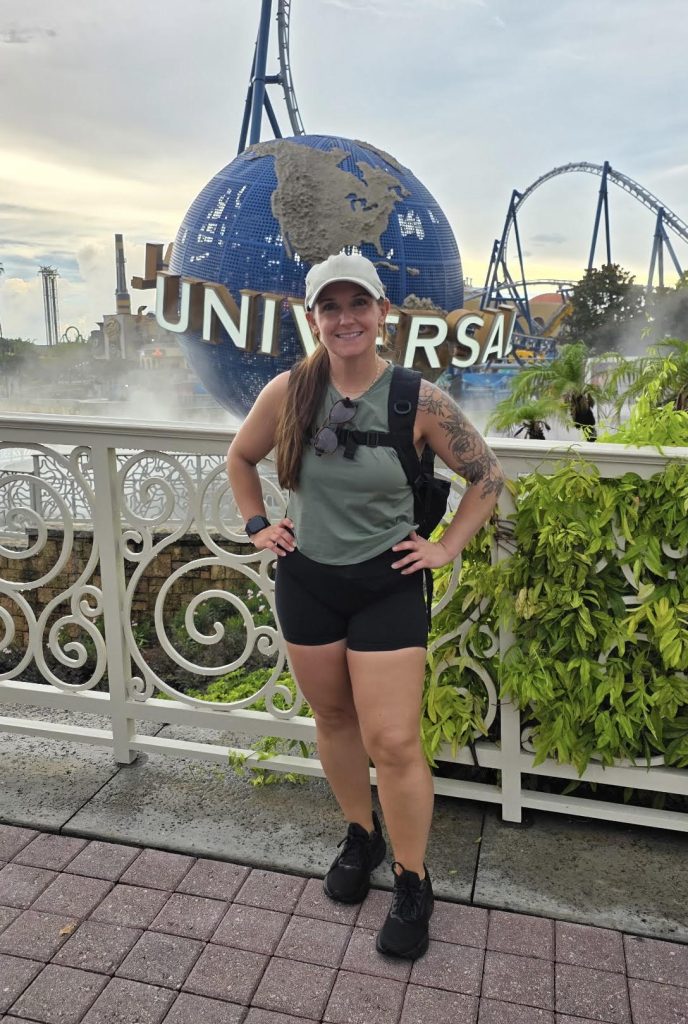
Brittany
(She/Her)
I’m Brittany, I am psychology student, Project HEAL Ambassador, and eating disorder recovery advocate with lived experience. Through No Weigh With Britt, I share my recovery journey, challenges misconceptions about eating disorders, and works to create greater awareness and understanding within the eating disorder community.
You Might Also Be Interested In
In Their Words: Eating Disorders & Older Adults
In Their Words: Eating Disorders & Older Adults By: ANAD Peer Support Volunteers Eating disorders do not discriminate based on race, gender, and even age. It's…
Learn More →I Didn’t Want Recovery—Until I Needed It
I Didn’t Want Recovery—Until I Needed It By Kelly Delaney (she/her) “But how could you still want something that is killing you?” This is a question…
Learn More →Ashley | Rebounding in Recovery
Ashley | Recovery Rebound Identity Crisis I started playing competitive basketball when I was 10 years old … and I absolutely sucked! I felt like I…
Learn More →